Rail is one of the pillars of low-carbon mobility. Nine times less carbon-intensive than road transport, three times more energy-efficient, it could become the backbone of how we travel. But it remains held back by high costs, a massive driver shortage, and regional or freight lines left abandoned due to lack of profitability.
This is the bottleneck Futurail has decided to break. The Franco-German startup, founded in 2023, just secured €7.5 million in funding (including €5.5M in equity, €1M in public grants, and €1M from a pre-seed conversion) to develop the first certified autonomy stack for trains. A technological and industrial bet that could transform rail into the backbone of sustainable mobility in Europe and beyond.
Why rail autonomy represents a step change
---
Today, each train requires 5 to 7 drivers working in rotation. In France alone, there's already a shortage of over 10,000 drivers—a figure that rises to 70,000 across Europe. Half the profession will retire within the next decade. The result: regional lines shut down, a massive shift to road transport, and climate commitments slipping further out of reach.
Futurail offers a radical answer: automating train operation through an onboard system that combines sensors (radar, lidar, cameras) with artificial intelligence algorithms. Unlike automated metros confined to closed circuits, this solution targets the entire rail network in open environments.
The value is clear:
€500k in annual operational cost savings per train; 20% reduction in energy consumption through optimized driving; the ability to reopen secondary lines or fully utilize depots and marshalling yards; enhanced safety through a system designed to meet the railway industry's most stringent standards.
At the European level, the widespread adoption of rail autonomy could double the modal share of rail and avoid more than 10 Mt of CO₂ per year.
A team of autonomy pioneers
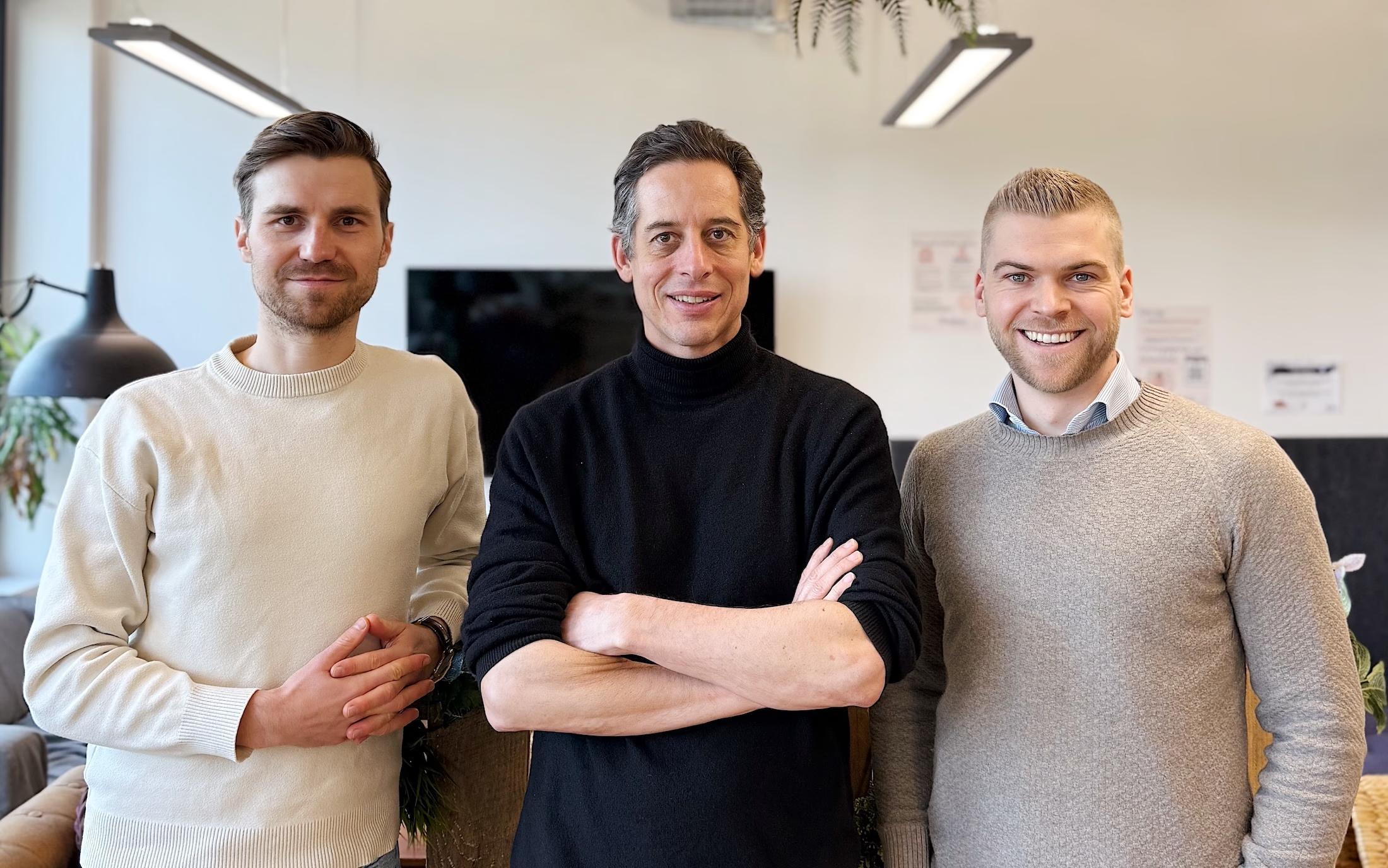
Behind Futurail are three complementary profiles, all veterans of the autonomous vehicle industry:
Alex Haag, CEO, Polytechnique & MIT alumnus, ex-Tesla and former CTO of Audi's autonomous subsidiary (AID, acquired by Argo AI). He scaled teams from 0 to 300 people and led the deployment of the very first Autopilot.
Dr. Patrick Dendorfer, CTO, PhD in AI and computer vision, specialist in rail safety standards, Argo AI alumnus. He oversees R&D and technical architecture.
Maximilian Schöffer, CCO, expert in mobility and transportation strategy, with experience at Circ and Edge Case. He leads business development and operator relationships.
An international and seasoned team, supported by a network of advisors (former Deutsche Bahn executives, machine learning experts).
Structuring partnerships in Europe and the United States
Futurail's approach is far from theoretical: the startup has already secured several key partnerships.
In France, with a major national operator and Lohr Industrie, to develop regional and rural mobility solutions. In the United States, with Parallel Systems, a startup founded by SpaceX alumni and already backed by $40M in funding, developing autonomous electric freight cars.
These pilot projects allow the startup to generate its first revenues, build international credibility, and advance the certification of its technology.
A market ripe for disruption
While the global railway market is dominated by major manufacturers (Alstom, Siemens, Stadler, CRRC), none of them currently offers a turnkey automatic train operation system for open lines. Their expertise remains focused on metros or signaling. Futurail is therefore positioning itself as a natural technology provider, rather than a direct competitor.
Facing equipment manufacturers who limit themselves to partial building blocks, Futurail is developing a complete, hardware-agnostic software stack, already chosen by players like Parallel Systems.
Our Investment Thesis
At Asterion Ventures, we back entrepreneurs capable of shifting systemic boundaries: decarbonizing entire sectors, transforming strategic industries.
We chose to invest €2M as co-lead alongside Leap435 (Munich), joined by EIT Urban Mobility and US investors (Zero Infinity Partners, Heroic Ventures). The round also includes non-dilutive funding (BPI, Région Grand Est).
Our conviction is simple:
The team checks all the boxes: technological credibility, industrial execution, commercial vision. The timing is ideal: rail is under pressure to absorb more traffic, even as the driver shortage worsens. The market is massive: 250,000 trains in Europe, representing €25B in annual recurring revenue potential.
Futurail has the opportunity to become the world's leading provider of rail autonomy, by building a certified, scalable, and exportable standard.
And what's next?
The funds raised will be allocated to three priorities:
Accelerate the hiring of engineers and certification experts, to double the team within 18 months.
Continuing pilots in Europe and the United States, and expanding the commercial pipeline.
Initiate the certification process, with a first milestone on depot automation by 2027.
Ultimately, Futurail is targeting the deployment of partially autonomous trains by 2028, followed by gradual expansion to secondary lines, before achieving full autonomy on main lines in the early 2030s.
In less than two years, Futurail has gone from an ambitious idea to an international reference in railway autonomy. This €7.5M round isn't just capital: it's a key milestone toward transforming a two-hundred-year-old mode of transport into the backbone of sustainable mobility.
We are proud to support Alex, Patrick, Maximilian and the entire team on this journey. Because the future of mobility won't be decided on roads alone – it's also on the rails.
To learn more: www.futurail.com