The Franco-Swiss deeptech announces a €4.5M pre-seed round, co-led by Episode 1, Asterion Ventures and Norrsken Evolve, following its launch at Entrepreneurs First. The mission: deploy an autonomous robotic fleet capable of operating continuously at sea, serving energy, climate and maritime security.
The ocean, the last operational blind spot
The ocean covers 70% of the planet, yet remains one of the least instrumented territories in the world. We've mapped the surface of Mars better than our own seabeds. We know in real time when a satellite drifts by a few meters, but not what's happening on an undersea cable 80 km off the coast, the same cable that carries 95% of our international communications.
This asymmetry has a reason: humans had to be taken out of the equation. In space, we did it early on, because there was no other option. In the ocean, we kept a model built on ships and crews, because we could.
That model is running out of road. 80 to 90% of the cost of an underwater inspection is now absorbed by the vessel and its crew. 600,000 offshore positions will go unfilled by 2030. And demand is exploding: offshore wind, data cables, pipelines, ports, critical infrastructure surveillance.
Technology born in space
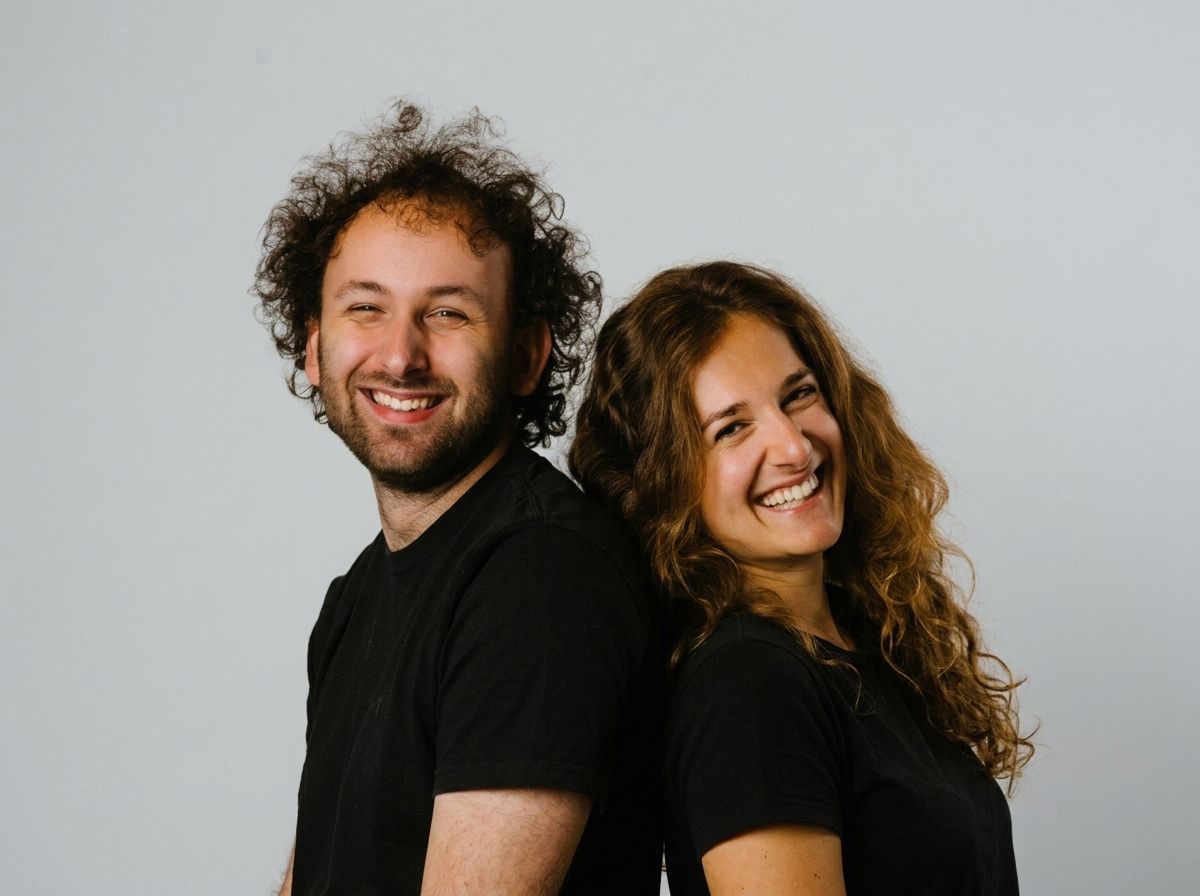
Bubble Robotics operates out of Paris, Zurich and San Francisco. The founding team brings together engineers from NASA, ETH Zurich and Entrepreneurs First:
- Patricia Apostol: ETH Zurich, formerly NASA JPL, where she worked on autonomous robotic balloons designed for Venus
- Jean Crosetti (CEO): climate deep tech and VC
They've built a team of engineers specialized in GPS-denied environments, onboard autonomy and long-duration systems, coming from NASA, ETH Zurich and leading robotics research labs.
This background isn't incidental. "Sending something to sea is almost like sending it to space," Patricia sums up. Both environments pose exactly the same engineering problem: no physical intervention possible, extreme conditions, energy autonomy as a hard requirement, scarce and expensive data, communication latency.
Teams that learned to operate machines on Mars or in orbit carry the exact grammar the ocean needs.
The product: an underwater constellation
Bubble Robotics is building a physical AI platform combining autonomous robotics, onboard perception and AI-driven data processing.
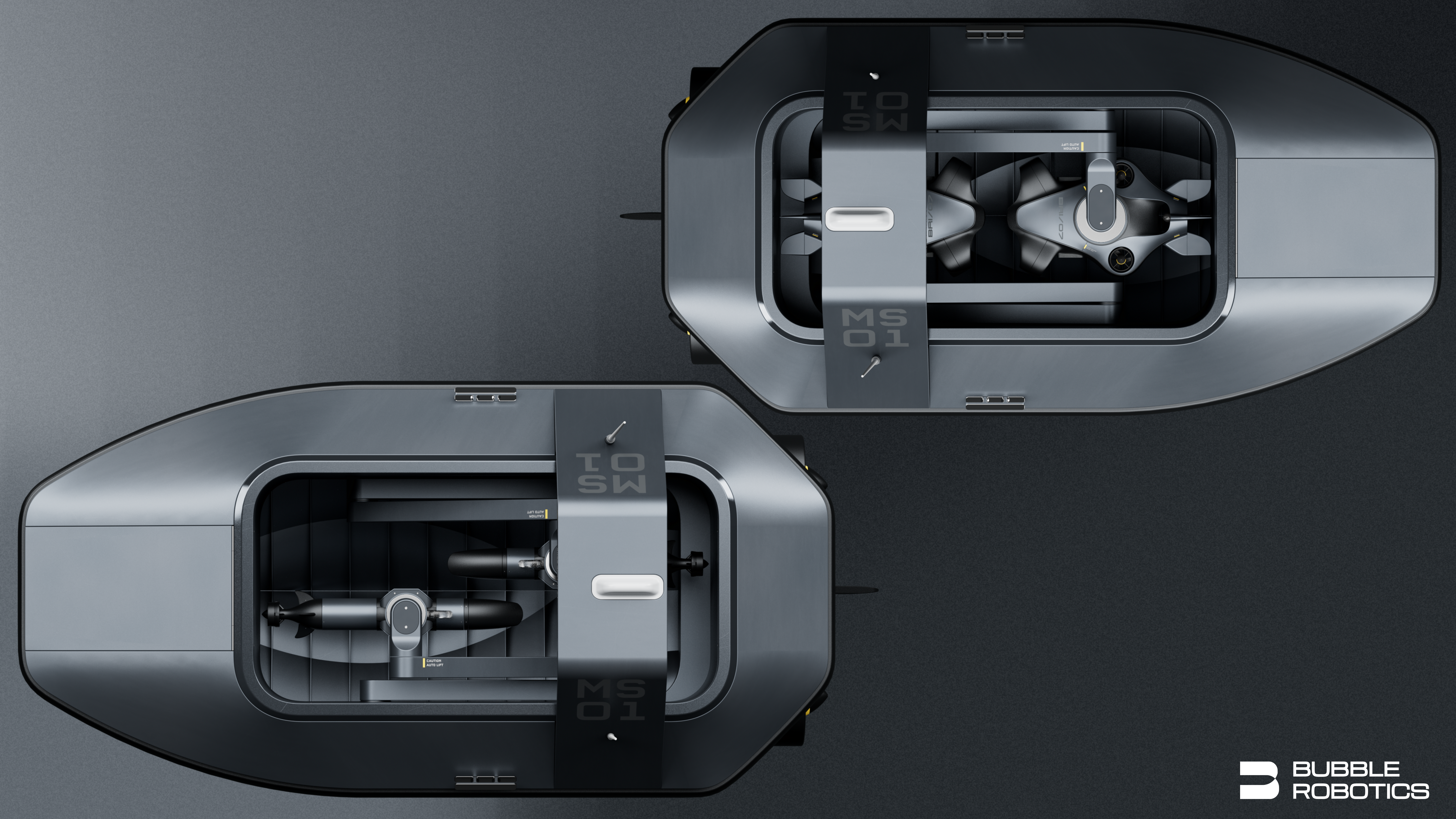
In practice, a fleet of small autonomous stations stays at sea for months at a time:
- Self-sufficient surface stations: onboard power generation, resistance up to sea state 7, self-righting capability
- Docked underwater drones: deployed on demand for close-range inspection, with automatic return to the station for recharging and data transmission
- Shore-based piloting: small teams supervise dozens of units in parallel
The whole thing is delivered as robotics-as-a-service: the industrial operator no longer pays for a vessel, a crew, a CAPEX. They pay for continuous operational capacity, at a tenth of today's cost.
Three verticals, three urgencies
Energy and offshore infrastructure Continuous inspection of critical assets (foundations, cables, pipelines, turbines) without ships or crews. Structural monitoring, millimeter-accurate mapping, non-destructive testing, at a frequency unreachable under the current model.
Climate and biodiversity Access to persistent environmental data, today almost nonexistent. Benthic mapping, photogrammetry, ecosystem monitoring, quantification of carbon capture potential. Bubble makes it possible to measure, understand and steer ocean dynamics over time.
Maritime security and defense "Cables are being cut between offshore wind turbine pylons. It's happening. We don't know how, we don't know when." Patricia's read is blunt. Bubble shifts the model from occasional surveillance to continuous underwater presence: acoustic anomaly detection, identification of unexploded ordnance, protection of critical infrastructure, port surveillance.
Traction is already there
Even before closing, Bubble has signed more than $4M in letters of intent. A first pilot is scheduled at the Port of Barcelona in January to de-risk the autonomy and underwater localization stack. The offshore V2, integrating propulsion and emergency return, is planned for the summer.
Early customers fall into three segments: ports and marinas, marine biodiversity and restoration players, and, as the primary target, offshore wind operators. Discussions are also ongoing with several European public entities, notably within the French defense ecosystem.
Why we're backing Bubble Robotics
At Asterion, we invest in AI that operates under the constraints of the real world.
With Living Models, we back an AI that reads the source code of life. With Darwin Data, an AI that surfaces the risks nature poses to businesses. With Bubble Robotics, we invest in an AI that operates physically in one of the most hostile environments on the planet.
What convinced us is the strategic reading of the moment. Sixty years ago, space became strategic because we decided to send constellations up there. The ocean is on the same trajectory, under the combined pressure of climate, renewable energy and European security.
Much like satellites, Bubble is deploying an underwater constellation, "cubesats of the sea" in Patricia's words, capable of observing the ocean continuously and building the most advanced world model of the seabed.
The ocean is the new space. The work starts now.
Congrats to Patricia, Jean and the entire Bubble Robotics team.