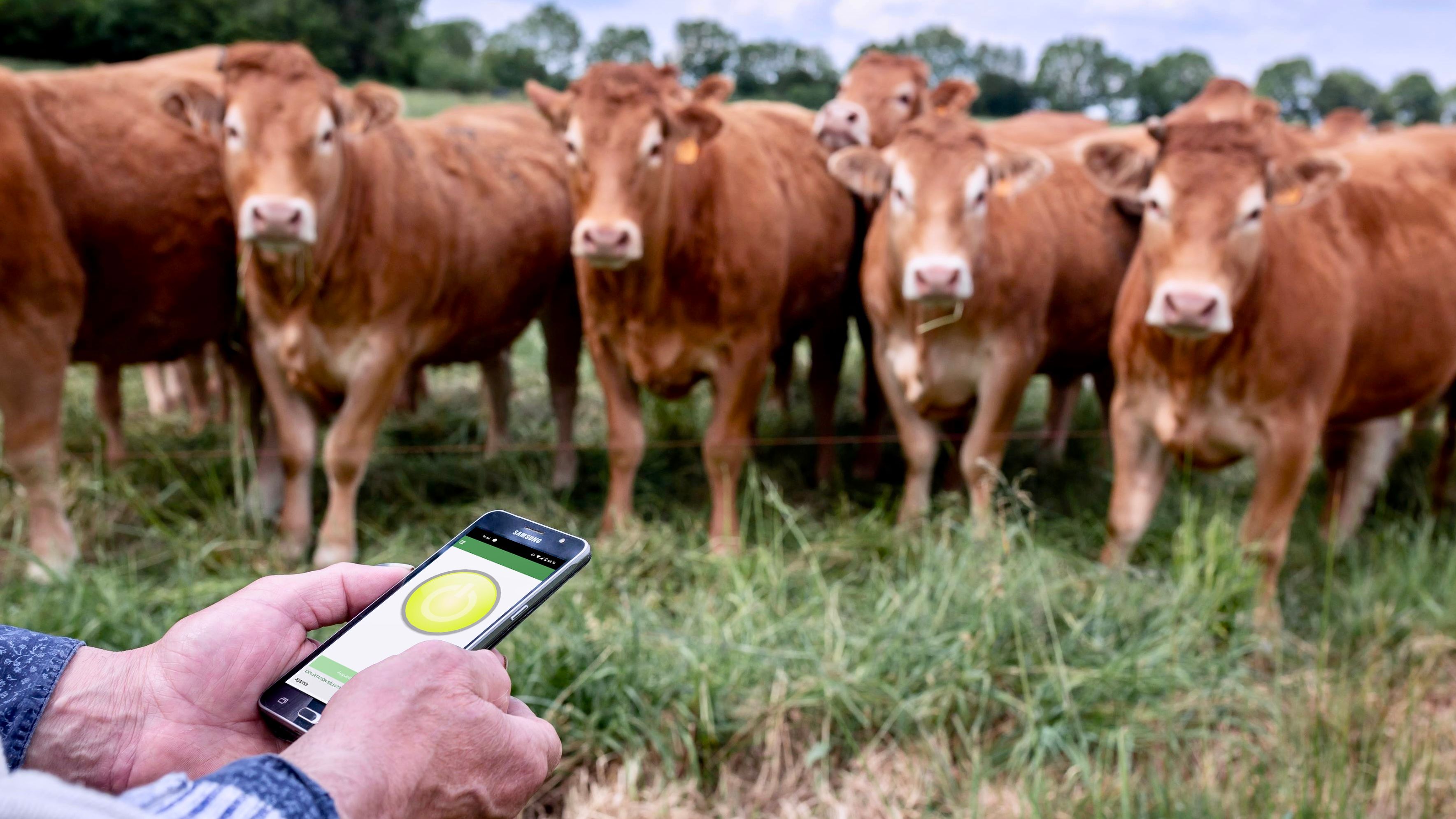
Aptimiz has developed a SaaS platform that enables farmers to measure, optimize, and analyze their working time. Let's break down what convinced us to invest in this company alongside Demeter, who led the round (Camille Wong's article in Les Echos covers this raise).
1. Working hours, regulations: farming, a profession in search of recognition
1.1. The number of farmers is in freefall
France currently has around 400,000 farmers.
While in 1982 there were 1.6 million of them (7.1% of total employment), they now represent only 1.5% of the country's total employment—a proportion divided by four in 40 years, according to INSEE (2019).
Agricultural professions are demanding and exhausting due to their working hours. According to INSEE, in 2022, farmers work an average of 55 hours per week.
There is no tool to manage their time that is both reliable (quality data) and easy to use.
In 2019, 88% of them worked at least one Saturday over the previous four weeks, and 71% worked at least one Sunday.
Work overload with long hours generates fatigue and illness among farmers and can lead to tragic outcomes.
In 2016, among MSA policyholders aged 15 to 64, the suicide risk was 43.2% higher than among policyholders across all social security schemes.
This is why 72% of France's 400,000 farmers rank reducing physical strain and working hours among their top priorities.
At the same time, regulation is imposing new constraints.
1.2. Regulations are tightening to make production systems more efficient
Traceability requirements will become increasingly important as the regulatory framework evolves, as evidenced by the National Strategic Plan under the CAP.
Indeed, it highlights the need to develop "digital tools that improve employment and working conditions, enhance traceability, and strengthen the performance of production systems."
Additionally, the European RED-II directive will require all biogas-producing farmers to document the origin plot of incorporated crops starting in summer 2023.
However, to date, only Aptimiz is capable of automating this traceability for over 1,400 anaerobic digestion sites in Europe and 18,200 across Europe.
Similarly, the rise of various certification schemes (HVE, CRC, Low Carbon...) also represents opportunities, as it creates additional reporting requirements for farmers.
2. Aptimiz enables significant time savings
2.1. A platform built around two tiers of services
Aptimiz, founded in 2018 in Angers by three farmers' sons, supports farmers and
winegrowers in managing their human and material resources through software
marketed through two service tiers.
The first addresses new traceability challenges through automatic collection of all tasks performed on the farm via a smartphone app for workers on foot and sensors for equipment.
The second involves supporting farmers in their decision-making through data interpretation, comparison, and simulation tools, on an interoperable platform that maximizes benefits for the user.
Aptimiz supports farmers in their day-to-day work as entrepreneurs by better anticipating changes, enabling rational resource allocation across their operations or service activities, and optimizing the use of agricultural machinery.
2.2. A promising launch
After 2 years of field development, Aptitrack, launched in May 2022, is the world's first 3-in-1 traceability software that is 100% input-free.
Aptimiz combines comprehensive analysis of human working time with equipment tracking, while providing exact and automatic traceability of all tasks performed on the farm.
This feature has opened up enormous opportunities by becoming a must-have for legacy compliance software deployed across more than 100,000 farms in France.
The result: over 100 hours of data entry saved per year per person by subscribing to Aptimiz.
This confirms the relevance of their value proposition and the sustainability of their business model.
3. The impact potential is significant
Aptimiz delivers a dual impact: both social and environmental.
3.1. A clear social impact
The platform paves the way for fair farmer compensation by enabling them to identify where they're gaining time and revenue versus where they're losing time and profitability.
This is achieved through 3 levers:
Lever 1. Saving time on tedious, low-value tasks
The regulatory recording of phytosanitary interventions performed on crops represents a heavy, tedious workload that brings no added value to farmers.
They must declare the date, location, dose, and type of products used for each spraying operation, etc.
With Aptimiz, no manual input is required (automation), so there's no time wasted—it's an easy-to-use tool.
Automated measurement and data collection enables farmers to gain actionable insights that improve how they organize their work and run their operations.
Lever 2. Improving farmers' daily operations and well-being
Mastering working time allows farmers to combine performance and well-being: working fewer hours while being more efficient
Aptimiz can act as an alert system when farmers exceed certain thresholds (100 hours per week, for example).
Lever 3. Integrating hourly profitability to negotiate better with the value chain
Aptimiz is transforming decision-making on farms by enabling them to factor in working time.
By adjusting their working time based on the needs of different areas (plots or buildings), periods (e.g., during harvest for winegrowers), and economic profitability, this improves the overall hourly profitability of the farm.
It's worth noting that few farmers know their cost prices (see this 2020 article).
Aptimiz is therefore paving the way for fair compensation across the entire processing and distribution chain.
3.2. An indirect environmental impact
The solution also has an indirect environmental impact that can be seen at three levels.
Level 1. It promotes local, higher-quality agriculture. Aligning the farming profession with the living standards of other citizens encourages farmers' children to take over family farms and allows those drawn to the profession to pursue it with greater peace of mind.
This will also give lenders better visibility, and therefore lower rates, when financing farm transfers or investments.
Level 2. It contributes to improving the carbon footprint. Aptimiz also generates an indirect impact through more data and analytics on farm management (machinery), enabling optimization of all processes.
For example, our research showed us that many farmers were looking to measure the footprint of their fuel emissions (CO2).
These results are not yet quantified, but could enable Aptimiz to increase its impact by analyzing the various positive social and environmental repercussions (inputs, water, health): this is part of the 2023 product roadmap.
For example, optimizing work time and machinery reduces fuel consumption. The range of fuel savings can be quite broad, between 3% and 15%.
Level 3. It helps some farmers transition
It's a safe bet that gradually, among Aptimiz's clients, successful transition examples will be identified and shared with the entire customer base.
By enabling performance tracking and ROI measurement across different activities within the farm, farmers have a tool that allows them to assess the effectiveness of changes they've made and roll back if needed, or continue with full visibility.
For all these reasons, we are proud to have brought together 25 renowned investors and the Fonds local Anjou Amorçage alongside Asterion to enable Aptimiz to launch a third generation of products and accelerate its commercial growth.